
By George Gomez, 2026 Custom Builders Council President, CEO and Co-Founder of Res Com Custom Builders

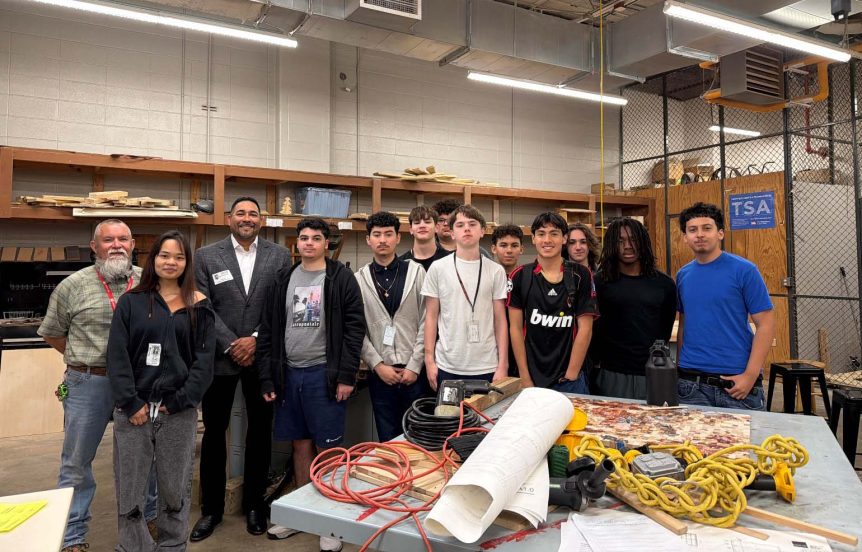
Langham Creek High School shop class students prepare for a statewide shed-building competition. Pictured with teacher Javier Torres and CBC President George Gomez.
In today’s world, it seems like everywhere we turn there is a new conversation about AI, automation, and technology. While these innovations continue to reshape industries, there are still countless opportunities in careers that remain essential to our daily lives, careers that cannot simply be replaced by a computer.
I’m talking about the skilled trades. Whether it’s plumbing, electrical, HVAC, roofing, or countless other specialties, these professions are the backbone of the construction industry. Every home we build depends on the craftsmanship, knowledge, and dedication of skilled tradespeople. While technology will continue to evolve, I believe there will always be a need for talented individuals who can work with their hands and solve real world problems.
A Growing Gap
Despite their importance, our industry continues to face a growing shortage of skilled labor. For years, society has promoted the idea that success only comes through a college education. Students have often been led to believe that if they don’t attend college, they are somehow settling for less. Unfortunately, that message has overshadowed incredible opportunities available within our industry.
The truth is, some of the most successful people I know never attended college. Instead, they learned a skilled trade. They showed up early, worked hard, mastered their craft and built rewarding and successful careers. Many eventually started businesses of their own, creating jobs and opportunities for others along the way.
A Visit That Changed the Conversation
I recently had the opportunity to witness firsthand why sharing this message matters. A couple months ago, I was invited to speak to a group of shop class students at Langham Creek High School in Cypress, Texas. The students were preparing for a state shed-building competition, and their teacher, Javier Torres, hoped I could offer some encouragement as they prepared to compete.
What I expected to be a simple talk turned into one of the most rewarding experiences I’ve had in a long time. I shared my personal journey about growing up in a low-income household and making plenty of mistakes along the way, to discovering the construction industry and ultimately building a career that I love. I spoke about the trade professionals we work with every day and the successful lives they have built without ever stepping foot into a college classroom. Looking around the room, I could see the students beginning to connect with my message. Many of them did not plan to attend college. I wanted them to understand that their future is still full of opportunity.
When It Clicks
Later that evening, Mr. Torres sent me a message that perfectly captured the impact of the conversation. “Thank you for taking the time. The word got out, and by the end of the day other classes were asking who you were. I can talk about these opportunities all day, but when it comes from someone else, it clicks. I saw it while you were speaking.”
His words stayed with me. Not because of anything I said, but because they reinforced that young people want guidance and hope. They want to hear real stories from real people who have built successful careers through hard work and perseverance.

A Blueprint for Change
Few people embody that mission better than my friend and mentor, David Herzog of Herzog Homes. With more than 40 years of experience in homebuilding, land development, and real estate investment, David has truly done it all in the construction world. But what makes his work so impactful is his understanding that the future of our industry depends on more than the homes we build, it depends on the people we inspire.
That vision led David to co-found Trade Campus, an organization that is helping revolutionize the way community colleges launch skilled trade programs. Trade Campus provides design, funding, and operational support to help communities build programs based on their specific local workforce needs.
By focusing on the trades most needed in each community, Trade Campus helps create a clear path for students to receive hands-on training and enter the workforce with real skills. Their 6, 12, and 18-month training programs are designed to prepare students at all levels for careers in the skilled trades, giving them the opportunity to earn real wages while building a meaningful future. What David and Trade Campus are doing is truly inspiring for our industry. They are not just helping build training programs; they are helping build futures.